MailChimp

Showing posts sorted by relevance for query protein. Sort by date Show all posts

Wednesday, September 14, 2022

My current take on nutrition.

I have several openings for this post. They don’t really go together, so I’m just going to put all of them here because I'm lazy. Enjoy!

1. In the new book, I have a line from 1994, along the lines of:

When anyone found out Anne was pregnant, they became a nutrition expert.


2. Re-re-re-re-reading the book, I find myself continually revisiting the time when I was deep in the vegan bubble. Every problem in the world was caused by people eating animal products. Every issue could be solved by veganism. From the section of the book when I was getting ready to go in for heart surgery after thirty years of veganism:


I asked a vegan medical doctor what preparation advice they would have if someone might be having bypass surgery in a week. This person basically said not to have the surgery, but instead go vegan. I asked what to do if that wasn’t an option. I never heard back.


The surgery saved my life, BTW.


3. Here in 2022, every day is a war between my love of food and my hatred of blubber. 


4. In addition to hating blubber, the older I get and the more times I almost die, the more concerned I am with my physical health. The ideal BMI is around 21, and despite my efforts, I certainly don’t have enough muscle mass to justify being above that. Given that I want to remain attractive to and active with Anne, I need to stay healthy.


With that said, here is a brief overview of my current take on nutrition:

Americans get too much sugar and too little fiber.

Sugar here is crazy. I was looking at a fruit bar recently, and it has almost half the daily recommended added sugar. One fruit bar!


I’m not a “keto” person, but I think that simple carbohydrates are a leading cause of why Americans are so fat. When we eat these carbs (sugars, white flour), our insulin spikes and the body decides to stock that energy away in fat.

Complex carbs – whole grains – don’t seem to trigger an insulin spike.

From this article:


obesity rates remain at historic highs, despite a persistent focus on eating less and moving more, as guided by the energy balance model (EBM). This public health failure may arise from a fundamental limitation of the EBM itself. Conceptualizing obesity as a disorder of energy balance restates a principle of physics without considering the biological mechanisms that promote weight gain. An alternative paradigm, the carbohydrate-insulin model (CIM), proposes a reversal of causal direction. According to the CIM, increasing fat deposition in the body—resulting from the hormonal responses to a high-glycemic-load diet—drives positive energy balance.


Obviously, this isn’t to say exercise isn’t important, just that we can’t eat a high-glycemic-load diet and expect to stay optimally fit.

This is probably why people who go paleo (keto / Atkins / whatever is the label these days) often lose some weight. It isn’t that all carbs are bad, just the simple ones that are everywhere. Try to cut all carbs and you’ll cut the bad ones. Throwing out the baby with the bathwater, it would seem, but helpful in a way (no screaming baby).


So the first takeaway (after "do a diversity of exercises") is: Avoid sugar and other simple carbs.

I’m not sure what I think about fat. It seems there is a difference between eating five grams of fat in an avocado vs those same grams of fat in margarine. Is it just accompanying fiber? I don't know.


Protein is perhaps the most frustrating nutrient for me. Many (if not most) people justify eating meat as a way to get protein. This has led many (if not most) vegans to lose their minds when it comes to protein. Saying that Americans get too much protein and that broccoli has enough protein are probably some of the stupidest things anyone has ever said.

Ugh.


For decades and decades, a huge swath of vegetarians has waged war on protein. And people in the U.S. eat more protein than ever. 


People like protein. They crave protein. They expect it and are satisfied by it.

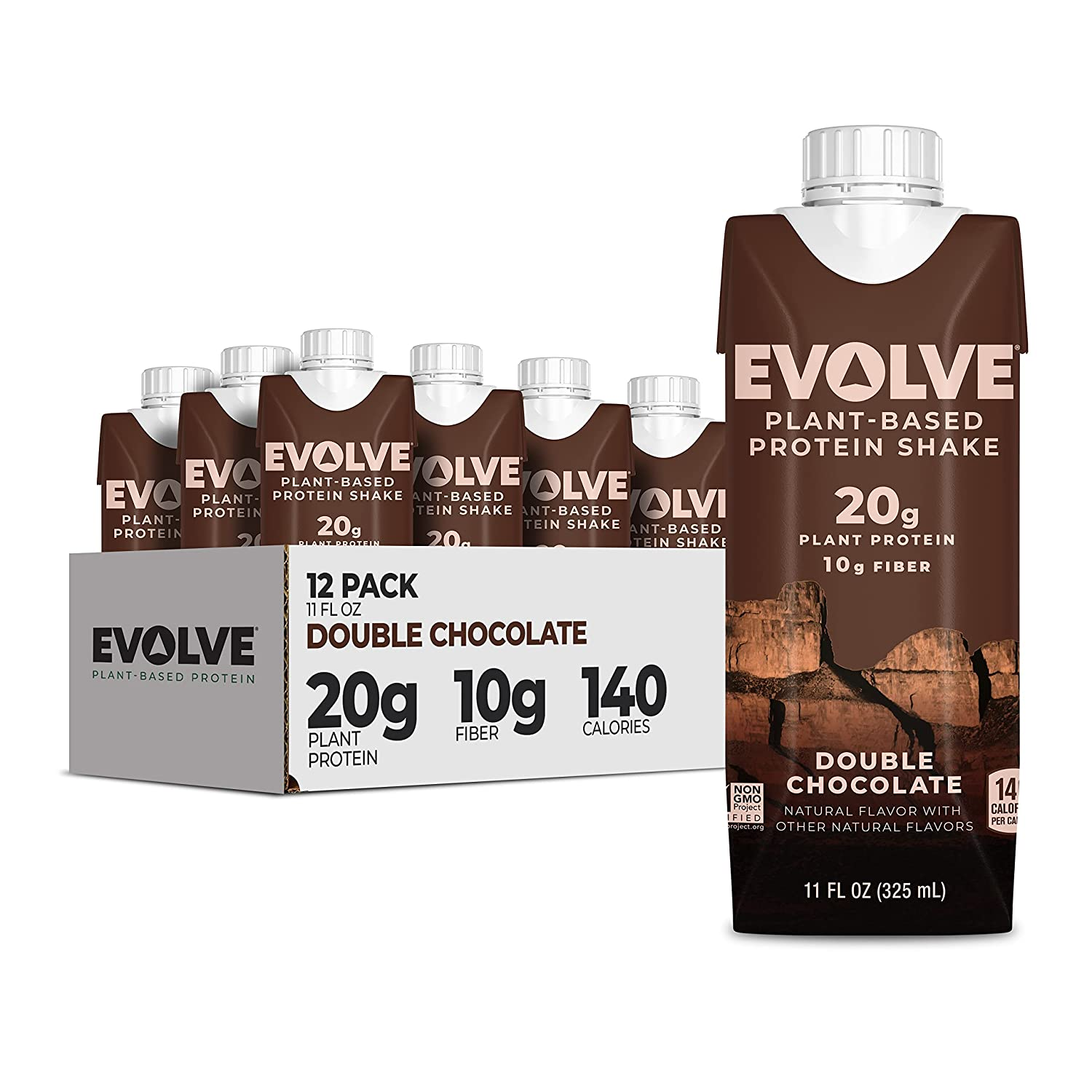
Vegans shouldn’t try to make protein the enemy. People love protein and hate animal cruelty. So rather than flail at protein, push on the animal side! (I started drinking this Evolve high-protein drink when my jaw was wired shut after I broke my neck and smashed my face.)


If we want to make a difference for animals, the foods we promote need to be what non-vegans are looking for, not what we prefer. Tasty, easy, satisfying, cheap.

Sorry – this was meant to be about nutrition and ended up another anti-vegan rant. Not very mindful!

In short: Cut out sugar and other simple carbs. Increase fiber and protein. If you can, exercise as much as you can. PS: Eat slowly. Food these days is so good (and generally so calorie-dense) that we can consume a lot of extra calories before our body can signal satiety.


No. Seriously: NO!


Friday, August 18, 2023

Our Ego Hurts Animals

Green Day (God's Favorite Band) / BJA - Ordinary World (live)

The deadliest food in the world.


Peter Attia, MD, has a new book*, Outlive, that discusses our best understanding of how to have the greatest healthspan - i.e., living as long as possible while healthy.**

A key takeaway is that most of us don't get enough protein, especially those of us who are older.

This inconvenient truth goes against the Vegan Dogma, which insists that people in the developed world get too much protein. Vegans don't say "too much protein" because we have done an honest, rigorous review of the latest research. Rather, we say "too much" because we can't admit that there might be any question about veganism's ease or perfection. This denial is taken to absurd and harmful extremes; e.g., one of the most common cups of Kool-Aid to consume is that even broccoli has enough protein. 

Here's a secret: 

No one has ever stopped eating animals because of that broccoli line. 

But: The vast majority of people who stop eating animals revert back. And today, the average person in the United States (and in the world) has never eaten more factory-farmed animals.

Another tenet of the Vegan Dogma is that everyone else is to blame for veganism's lack of impact. I get it - Vegans*** have their self-worth tied to the perfection of their Veganism. Yes, yes, yes, they are all much smarter and better than the rest of us.

However, those of us who care about helping animals instead of Defending the Faith must answer for our absolute failure to make the world a better place for other animals. That includes me (one of the reasons I wrote Losing****).

In addition to two other factors,***** dishonesty regarding health and nutrition drives the 80+% failure rate of new vegetarians and vegans. We are dishonest with ourselves (We Want to Believe) as well as with others. 

For example - every time I make this broccoli point, a Vegan will angrily comment: "But broccoli does have enough protein!"

<sigh>

I don't expect this column (or anything I write) to have any impact in the broader world. Humans - myself included - are fundamentally insecure and in desperate need of validation. But I would suggest you, my smart and good-looking friend, check out Dr. Attia. Here is a recommended podcast* that covers the book in depth. 

It could help to make you healthier and happier. Personally, I am working to get more protein (without increasing calories) and build up muscle, especially given my history [!] and age.

*Attia's book is wildly overwritten and could really use a Cliff Notes version. Sam Harris published an hour of his interview with Attia (we won't give Harris any of our money, so we're not subscribers and can't say anything about the last two hours). As expected, Harris used the opportunity to take a shot at vegetarians re: protein. 

**Dr. Attia says he used to think that nutrition was the most important factor to healthspan, but now thinks exercise is more important.

***Obviously, most people who don't eat animal products aren't self-centered dogmatists. But you know people who capitalize "Vegan" and can't discuss anything without saying the word "Vegan" over and over. It is why I argue in Losing that those of us who want to reduce suffering should stop using the word "vegan."

****You didn't think I'd go an entire post w/o mentioning my book, did you?

*****The two other main ways we hurt animals: lack of thoughtfulness in our messaging and anger and fanaticism. Shocking, I know.

PS: the daughter of one of the most famous vegan advocates ever is now an ex-vegan, pro-meat social media influencer. You can see her in this interview saying, "The human body can’t be vegan and healthy" and “I’m going to be eating animal protein at every single meal, because I believe that that’s how I can keep my life and my health.” On her website she touts her abandonment of vegan eating and urges meat and seafood consumption to stay well.

PPS: I'm not exempting myself from this post's title, as I hope Losing makes clear.

Tuesday, December 27, 2022

Tips Tuesday: Quick Protein

Song: Alana Davis, "Blame It on Me" (full album). "32 Flavors" and the title track are probably best.


We put off giving into the air fryer hype for years. However, as Anne came to favor a new source of protein, it was much easier to crank up the air fryer than turn on the whole oven (especially during the warm months here). 

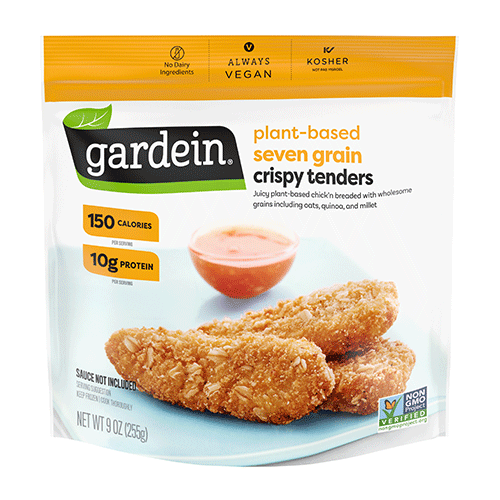
While my quick protein of choice is Tofurky Hickory-Smoked Deli Slices, Anne prefers Gardein's Seven Grain Crispy Tenders. (Not the best choice for meat-eaters, though; see here.) Pop them into the air fryer, and 12 minutes later, ready to eat!


Trader Joe's Fully-Cooked Falafel also goes into the air fryer. One of the many great things about Germany is that you can get good falafel all over the place. This falafel from TJ's is another easy fix - wrap with their herbed tahini, pickles, lettuce, and anything else...

And even quicker is Evolve Plant-Based Protein Shake, which Anne has in her coffee (along with some chocolate Oatly). I drink some before and after working out. We discovered this when my jaw was wired shut.

Every Get Fuzzy treasury is good!


Monday, May 15, 2017

Simply Give People What They Want

One of the commonest questions I’ve gotten over the past 30 years is how to convince a loved one – often a spouse – to stop eating animals. It is a difficult issue, and I’ve struggled to find a satisfactory answer.

Today, though, it is much easier to answer this question. The key is to change the issue from “How do I get my partner to believe what I do?” to “How can my partner’s diet cause less harm?”

One mistake I made early on was to think that the only diet worth promoting was exactly what I ate. Spicy Thai dishes, vegetable-stuffed peppers, quinoa and mung beans – making extended family eat meals like these led to upset stomachs, resentment, and an even worse opinion of vegans and veganism than they had already.

Contrast this with people who don’t care about pushing personal philosophy, but simply want their family members to eat fewer animals. For example, we have friends who make their family’s Taco Tuesday meals with Gimme Lean Ground Beef. No one has ever noticed the change – except, of course, the cows who haven’t been killed.

Currently, most people have a negative view of vegans and veganism. Sadly, this is partially because some vegans are like I was – pushing vegan food that others might find “weird” and “unsatisfying,” all the while convincing many people that veganism is an intolerable deprivation.


Humans have been programmed by evolution to want fatty and high-protein foods. Instead of pontificating about the dangers of fat and the protein content of broccoli, we should recognize that basically no one eats meat because they want animals to suffer. They simply want familiar, tasty, satisfying foods.

We are extremely fortunate to live in a time when we have the ability to put aside our personal preferences and simply give people what they want! I have seen this work over and over and over.


For example, I was once working with MBA students at the University of Arizona on marketing research into attitudes about vegetarianism / veganism. After preliminary research, they created categories for individuals; one category was “hard core meat eater, will never consider changing.” On the last day of the research project, the owner of the local veg restaurant brought in “chicken fingers.” One of the students who had listed himself as “hard core / never change” exclaimed, with genuine surprise, “Hey, I could eat this!”


Ellen, who has never eaten “real” meat, would take Boca chicken nuggets to events in high school. These nuggets – never labeled “vegetarian” – were always scarfed down immediately. Once, a Science Olympiad teammate saw Ellen eating a nugget and exclaimed in shock, “Ellen! You’re eating meat!!” They couldn’t believe the nuggets were entirely plant-based.

So if you live with a meat eater, don’t try to convince them to “go vegan.” Just feed them what they want! If they don’t like Gardein’s Ultimate Beefless Burger, try the Beyond Burger. If they don’t like Beyond’s chicken strips, grab Tofurky’s! Tofurky’s sausage not a hit? Try Field Roast’s next. And I’ve never met anyone who didn’t like Gimme Lean’s sausage or Tofurky’s deli slices. There are so many “roasts” out there that you’re sure to find one everyone loves! My homemade seitan and gravy has satisfied the holiday demands of hard-core meat eaters, leaving everyone happy – especially the animals!


In the end, it is easier to agree on food first and worry about details like philosophy and purity later. We only care about the bottom line – that people aren’t eating animals, regardless of their reasons.


Wednesday, February 25, 2015

Animals Not Arguments

From 2010. Taken from The Accidental Activist.
Portuguese translation.


When I went vegan more than twenty years ago, a common theme was to “win an argument with a meat eater.” Every topic was fair game, and every question or theory—no matter how tangential or absurd—was promoted and defended fanatically.

I fell into this trap, too, believing and parroting the most outrageous claims about impotence, water usage, and other absurdities. It took me a long time to realize the point isn’t to show how many claims I had memorized, or to glorify my veganism, or to “defeat” a meat eater.

Rather, the bottom line is to help animals by helping more people make informed, compassionate choices.

Nonetheless, many dubious “pro-veg” claims continue to float around today, undermining effective advocacy for the animals. For example, some vegans feel the need to claim that veganism is “natural” (whatever that might mean). To this end, the vegan diet (as though there is a single vegan diet) has to be perfect in and of itself, no planning required, and no supplements. This leads to one of the most harmful fantasies: that we don’t need to worry about nutrition at all, including things like protein, zinc, iron, or vitamin B12.

Of course, I understand the desire to believe that veganism is our natural diet (and would cure baldness, feed the hungry, bring world peace). But our goal isn’t to show how awesome veganism is. What is important is preventing cruelty to animals. To do this requires an honest evaluation of reality, from the nutritional aspects of veganism to the psychology of how people can and do change.

Still, many activists think, “If one argument for vegetarianism is good, then ten are better, and a hundred are even better!”

But this is actually the opposite of how human psychology works. An argument for significant change isn’t strengthened by volume. Rather, any case for change is a chain—only as strong as its weakest link. Past a certain point, every additional argument offered to a non-vegetarian both dilutes and distracts from the strongest argument for making compassionate choices.

Instead of being left with the concrete, indisputable connection to cruelty, the case often presented leaves many meat eaters thinking the following:


  • “Yeah, maybe I should get a chicken sandwich instead of that burger.”
  • “What I eat isn’t really going to impact someone starving in Africa.”
  • “What I eat isn’t really going to affect global warming.”
  • “This reminds me of that story showing how chicken is so much more environmentally friendly than beef.”
  • “Gawd, what a fanatic—like I’m gonna eat only unprocessed fruits and vegetables.”
  • “They think animals are more important than people!”


As I’ve said before, meat eaters are the only ones in a position to save animals in the future. We have to engage them in a realistic, constructive, and honest manner—not glorify ourselves or impress other vegans.

Of course, just as I appreciate the desire to believe veganism has near-magical powers. I absolutely understand the desire to defend our personal veganism with an endless litany of arguments, so as to “win an argument with a meat eater.” But again, defending ourselves/winning an argument is actually the opposite of how best to create real change for the animals in today’s society.

Any time we offer an argument that can be debated (caloric conversion ratios, water usage, mortality/specific disease rates, relative carbon footprints/nutrition quality), the animals lose.

Whenever I mention that we must stay focused on the indisputable bottom line of cruelty to animals, some folks reply: “But my Uncle Bubba doesn’t care about animals! I have to appeal to his self interest! Suzy at Meetup said she went veg for health reasons, so it obviously works!”

It is hard to accept, but Uncle Bubba is ultimately irrelevant to our current work for the animals. He will be dead long, long before he could possibly become the impediment to a vegetarian society. Instead, our insistence on believing in and promoting the “magic” argument that “appeals to everyone” will, at best, lead Uncle Bubba to replace red meat with much smaller chickens and fishes. The net result will then be that his choices cause many, many more animals to suffer.


When we offer arguments that reinforce the idea that everyone should be motivated only by self interest, we reinforce society’s call for people to change from eating large animals to smaller animals. Therefore, we must always assess the total net impact of our advocacy on all animals—not just whether an argument sounds good to us or a worked for a few individuals we happen to know. Regardless of how a story, study, or claim sounds to us, if there is any chance it could lead non-vegetarians to eat more chickens and/or fish, we should not promote it.

Of course, arguing for people to eat “healthy” will also reinforce the assumption that we should only do what we feel is in our best interest.

When I stopped eating animals, about five billion birds were killed in the U.S. each year. Now it is almost ten billion—all because of “self interest.” We advocates obsess over the fact that the “health argument” convinced raw foodist Suzy at Meetup, and we conveniently ignore our culpability for the near doubling of animals slaughtered for “healthy” food. It is simply wrong, on every level, to turn a blind eye to the huge increase in the number of animals suffering and the reason behind that horror: self interest.

Let me emphasize again: I want to do whatever I can to reduce the number of animals suffering. I totally sympathize with the desire to find the perfect self-centered argument that will appeal to more people. But we can only help animals by being more interested in reality than our personal desires. How powerful an argument seems to us is utterly irrelevant. Only by working in the real world and convincing more non-vegetarians to make net positive change can we really help animals.

The facts are simple, stark, and indisputable:

1. At this time, there simply is no magic argument or combination of arguments that will convince everyone—or even a majority—to go vegan.
2. The health argument, as it is actually interpreted and acted on in the real world by non-vegetarians, has killed many, many more animals than it spared.
3. Every additional argument we present to meat eaters gives them more distance between themselves and their real and immediate connection to the brutality on factory farms.

The question we must each ask is: Will we work for animals in the world as it is, or live in the feel-good vegan echo chamber?

Each of us can make a real, significant difference. But we can’t afford to make my past mistakes again, or try to win an argument. Rather, we must focus on truly helping animals.

Monday, May 19, 2014

Quite Probably My Favorite Recipe


Here's the thing about my cooking: I rarely make a recipe the exact same way twice.

I'll vary it by what we have on hand, what was on sale, etc. Especially with a recipe like the below, nothing will go wrong (e.g., it isn't a soufflé that will fall if everything isn't exactly right). It is in keeping with our protein / veggies / carb / sauce approach to meals -- nothing magic, exotic, or difficult.


So here's the general recipe, and then notes / variations.
  • 1 medium onion (generally red)
  • 2 peppers (generally a red and a yellow)
  • Some form of "strips" of veggie meat (we use half a package of Beyond Meat Chicken-Free Strips, but you could use cut-up Boca Burgers or Gardein's Ultimate Beefless Burger. We used to use Trader Joe's Chicken-Less Strips)
  • 1 apple (optional)
  • Bottle of Enchilada Sauce (we generally use Trader Joe's; can use salsa)
  • Oil as needed
Tortilla shells (or taco shells, or just chips)

I cut up about 1/3 of the onion into thick strips and saute them on medium heat for a few minutes. I stir in about 2/3 of a pepper (cut into thick strips) for a minute or two, then the chicken-less strips for a few minutes.

After 3-4 minutes, I add in another 1/3 of the onion, in thinner strips. After another 3-4 minutes, I add about 2/3 or a full pepper, also cut into thinner strips. After 1-2 minutes, I put in pieces of the apple and pour in the enchilada sauce; reduce heat to simmer. After a few minutes of simmering, it is good to go!

I serve on tortillas with Daiya or a homemade "cheeze," along with Tofutti Sour Supreme, a homemade dip, Annie's Goddess dressing, or vegan ranch dressing. (I add habanero sauce for mine.)

We'll have any leftovers with rice and chips the next day.

By adding in the onion and pepper at different times, some will be well-cooked, and some will still be crunchy. (I generally save some onion and pepper for a future dish; e.g., Tofurky Italian Sausage w/ sauce, or for taco meat.) I also add in other vegetables, based on what we have on hand -- last time, I put in green beans -- the right size, and crunchy too! Putting the apple in at the last moment leaves those pieces crunchy as well.

Enjoy!

Wednesday, July 18, 2018

Vegans vs. animals: "Me me me me me me me."

The UK animal rights organization Animal Aid has been running a "Mark It Vegan" campaign since 2016. The group recently released a poll showing that some vegans, vegetarians, and self-identified meat-reducers would feel "valued" and "accepted" if grocery stores would mark their products in some specific way to signal those products are vegan.

Because, of course, vegans' feelings are the single most important concern in the world.


I also saw this headline about the poll: "Vegan Labeling May Increase Supermarket Own-Brand Sales." This headline is misleading for several reasons. The first is that the label wouldn't have to say "vegan" to signal to a certain population. It can be a subtle "V" symbol, or just say "100% plant-protein."

Worse, the survey was only of the veg / near-veg population. You can't say how overall sales would be affected without polling all shoppers. We have lots of data showing that labeling a product "vegan" or putting it in a special vegetarian section causes the product's overall sales to drop significantly (more).

So the question is: Do we want more animal-friendly products sold to the wider population, or do we want vegans to feel accepted? Sadly, loads of people fall in the latter category.


Monday, May 1, 2023

May Day's Tuesday Tips: Crispy Lentils! (And music) (And I know it isn't a Tuesday)

I'm a sucker for potato chips and chip-like products (e.g., Pringles and Munchos) - so much so that I just can't buy them. 

But now, thanks to Trader Joe's, I can eat something not utterly terrible for me:  Papadums, lentil and chickpea crisps. Excellent - with a bit of fiber and protein (still saturated fat, though). And they come in puffy bags to prevent the chips from getting crushed.

And in music news, two quite different new sources:

Gray Days and Gold (eclectic happier mix every month, via Jane Friedman)

Merc Transmission 23 (techno, groovy playlist via Kenny Torrella

Wednesday, March 1, 2017

Bird Flu Is Back

From New Scientist:

·                 
Bird flu strain hitting China may be getting more infectious

Bird flu
Pandemic possibility
STR/AFP/Getty
AVIAN flu is on the rampage in China again. There have been 424 cases in humans already since last October, more than a third of all those identified since the H7N9 virus emerged in 2013. And it is spreading.

This week it was announced that the virus has acquired mutations that could make it a much bigger problem.

H7N9 mainly infects birds and doesn’t readily pass from human to human, but should it acquire this ability a deadly pandemic could ensue (for more on how to tackle the next pandemic, see “
Plague! How to prepare for the next pandemic“).
The virus spreads in poultry without making birds visibly sick, so it is often only found when people fall ill. But this week both mainland China and Taiwan reported human cases in which a surface protein on the virus has a mutation that makes it lethal to chickens. If that spreads, H7N9 will be 
“highly pathogenic” like H5N1.
While the mutation doesn’t make people any more sick, it allows the virus to replicate much faster in chickens. With more in circulation, people, and perhaps pigs and other mammals, are more likely to catch it. Each case is a chance for H7N9 
to adapt to mammals and perhaps become better at spreading from person to person.
Our only real defence is a vaccine. Last week, China launched clinical trials of four strains by a state-owned vaccine firm. But even if the vaccine works, the world can’t yet make enough to cope with a pandemic.


Thursday, February 19, 2015

Actually Useful Comments!


Pre-script: If you read only one link related to this, please read Vincent's great article!


At least someone cares about my financial well being*:
Matt Ball should just get a corporate public relations job at Niman Ranch Meats, Chipotle, or some other corporate animal product food peddler. He’d fit in with the big shots, and the job would fit his philosophy. He make a lot more money, too!

But some people actually read all of my article and Tobias' article, and offered insightful comments:

Carolyn summarizes:
They're asking us to think about why we'd say yes or no - to give the issue serious consideration, therefore seriously considering why we're vegan ourselves.

Gerry gives this example:
Funnily enough, something similar to this came up the other day for me in a way that was not hypothetical. A friend asked me how to deal with family members who would not eat at her house because they refused to eat vegan food (not for any ethical reason but because it was unfamiliar).
    We discussed whether she should agree to cook meat for them the next time they visit if they in turn agreed to try the vegan food on the following visit. If you run the numbers, it means that one less meat meal is consumed (without this Faustian bargain the meat eater would stay home and eat meat both times).
    More importantly, if the visitors ended up liking the vegan dish it could mean that they would broaden their diet to to include more protein from non-animal sources even if they continued to eat meat (as they probably would).
    This situation did not involve my vegan friend actually eating any meat, her compromise was merely to cook meat. It seemed like a good compromise to me

Dobrusia has an even better example:
Some undercover investigators eat meat because otherwise they would blow their cover. It's hard to pretend you're a factory farm worker when you eat tofu. So it's not just hypothetical, extremely devoted activists make this decision, and YES it does help more animals than being vegan for the same period of time.

I brought up Dr. Greger's example of how our pursuit of being ever-more-vegan can actually hurt animals by turning off people from considering it.

Thanks to everyone who actually read the articles and gave thoughtful, non-knee-jerk responses! (*And in case you were wondering, I'm joking re: financial well being.)

Tuesday, April 14, 2015

An Environmental Argument to Help Animals

Many, if not most, environmental arguments tend to focus on the serious impacts of beef. Although we  see a vegan diet as optimal, most people instead see chicken as being vastly superior to beef (and increasingly cheaper than beef). Any time someone replaces beef with chicken, many many more animals suffer.

Here is a great argument that actually helps chickens, from New Scientist (March 21, 2015, p. 44):
Such a switch [from chickens to plant-based substitutes] could make a difference to the environment: if we all swapped chicken for beans, for example, greenhouse gas emissions would be much lower. Chicken is responsible for 6.9 kg of greenhouse gases per kg of meat, compared with 2 kg for bean protein.

 Cross-posted at the VegFund blog

Monday, February 16, 2026

2025 #1: Idiot or Fanatic?

The most popular 2025 post: 


You know where to find that quote.


(Below is basically a rehash of this post.)


Several people I know badmouth alcohol as "poison." Of course, you get the same thing from many vegans about animal products, including the claim "Casein is the most relevant chemical carcinogen ever identified" - to which tobacco says, "LOLZ: Hold my beer." 

[Edit: This Freakonomics episode presents dairy as a wonder food.] 

This is the general pattern - what I do is correct. If you do less than I do, you're a "poison drinking" idiot. If you do more, you are a crazy fanatic.

My current take on the evidence is that physical fitness is the most important determinant of healthspan. Everyone has their "studies" to "prove" their personal view, but the numbers here convinced me that diet is not the single greatest factor.

Do you spend several hours every day doing optimal exercises? Do you get in just the right amount of Zone 2 activity, with regular blood draws during exercise to measure your lactate levels? Do you do perfect VO2 Max workouts? Do you do all the balance work recommended? Do you lift the right weights in the right way at the right time? Do you work walking on a treadmill, never sitting? Do you have a glucose monitor stabbing you regularly to make sure your levels stay optimal? Do you really get the optimal amount and quality of protein? Have you perfected mindfulness to keep your stress low? Do you get the optimal amount of sleep without any aid at all? Are you the perfect BMI and percentage body fat? Have you filled your life with a solid, loving social network? Do you care only about the things you can impact, and let everything else bad fall away with no impact on your mental health?* 

Wait. You don't do every single one of those things?

How can you stand yourself, you idiot?

Of course, I'm joking.

It took me a long time to get to this point, but I don't care if anyone thinks I'm an idiot. I don't care if others think or act like me. For example, I don't care if you drink alcohol, or do shrooms, or gorge on tater tots, or skydive, or worship Vishnu, or practice autoerotic asphyxiation, or run ultramarathons, or watch trashy TV.

What I do care about is suffering. 

It doesn't matter at all if another person's beliefs or actions correlate with mine.

What matters is if they are causing suffering, to themselves or (especially) to others. 

I don't know how to change anyone's mind to have them cause less suffering and suffer less themselves. But I do know that being right is clearly not the way to reduce suffering.

Genuine caring is better. True kindness is better. No judgement. We need to start there. 

It is very hard, I know. But it would be a huge advance.

Sunday, June 21, 2015

What the Public Reads

If you read only a stream of news from vegans, you probably think every animal product is a deadly poison. But even if that is the truth, all that really matters is what the public believes. Here is an example of what they are reading these days:


Can’t resist red meat? It may not be the healthiest menu option but some equally tasty side orders could limit the damage

A succulent steak with creamy peppercorn sauce or a chunky burger laden with cheese. Could there be a better route to heaven (via a heart attack)?

Meat often gets a bad rap when it comes to health. When consumed in abundance, red meat probably does raise the risk of colorectal cancer and cardiovascular disease.

So what do you do if steak and blue cheese just happen to be your favourite flavour combination? Well, you might be on to a winner – it's just possible that adding dairy to your meat consumption might limit the damage.

First, it might help mop up some of the fat. France has one of the highest levels of cheese consumption in the world, yet one of the lowest levels of coronary heart disease. Some put this down to the fact that the French also consume a lot of vegetables, but several studies suggest that consuming cheese or milk causes a drop in the levels of "bad" LDL cholesterol in people's blood. "When you look at people who eat a lot of cheese compared to those who don't eat any, there's no difference in cardiovascular risk or diabetes – and if anything it tends to be beneficial," says Arne Astrup at the University of Copenhagen in Denmark.

One possible explanation is that the calcium present in abundance in cheese is binding to fatty acids and cholesterol in the gut, causing some of them to be excreted. However, giving people calcium supplements doesn't seem to have the same beneficial effect. It's also possible that certain bacteria or fermentation products in the cheese influence the balance of nutrients that are absorbed by the body.

Super spuds

Calcium consumption could also be a way to reduce the damage caused by another constituent of red meat: heme. This iron-rich substance plays a key role in transporting oxygen around the body, but free heme can react with DNA in the cells lining the gut and boost the risk of developing colorectal cancer.

Calcium seems to mop up heme and render it harmless; rats fed a heme-rich diet seem to be protected against its carcinogenic effects if calcium is added to their food. Sadly for steak-lovers, high levels of calcium react with protein, rendering meat hard and dry. Adding milk, cheese or yogurt to the meal might have the same effect, but it's unclear how much you would need to eat to negate heme completely. And high cheese consumption is bad for your waistline and so can bring health problems of its own.

What about vegetables? The EPIC trial, one of the largest investigations into the health effects of red meat, found that the early death risk was lower in meat eaters who reported consuming lots of fibre (abundant in many plant-based foods) than in people who ate very little meat. Similarly, people benefit from eating cold potatoes with their meat. It appears that what is called butyrylated resistant starch, produced when potatoes are cooked and then left to cool, protects against DNA damage to gut cells and so may blunt red meat's association with colorectal cancer.

Then there's processed meat, widely considered more harmful than fresh on account of the nitrite preservatives used in its production. These can react with fats in the diet and produce other cancer-promoting substances. Here, too, fruit and vegetables may provide a solution as some of them contain chemicals called flavonoids. Concentrated flavonoids are currently being investigated as an alternative to nitrites for preserving meats. "They stop microbes from growing and the meat has a shelf life which is acceptable to meat producers," says Gunter Kuhnle at the University of Reading, UK. "The idea is to help the food industry to produce meat where the links with colon cancer are at least reduced, or maybe not there at all."

From issue 3023 of New Scientist magazine, page 32-33.

Tuesday, August 15, 2023

Tuesday Tip: Maximizing Mouth Money

Alison Krauss & Union Station - The Lucky One


Growing up, I generally didn't like what I was served. Pork chops, cheap cuts of cow, tuna-noodle casserole. [blech] Often, my bologna-and-Velveeta sandwich was the best thing I ate during the day. The only things I liked were tacos & pizza (which I often made, and only when my dad was working) and cheeseburgers & steaks (the latter were always a special occasion).

Except when we went to a seafood restaurant [double blech] going out to eat (also always a special occasion) was a fantastic reprieve for my tastebuds. 

This idea - restaurants good!** - was so ingrained that it took me decades to realize that what Anne and I ate every day was as good or better than what we would get at (or from) a restaurant. 

For example, my favorite recipe is better than nearly anything I've ever had at a restaurant. Anne prefers our green curry. (Two versions* - 1, 2 - although we don't get anywhere near that fancy: Potato, sweet potato, soy curls, carrots, peas, maybe some apple; the sauce is coconut milk, Thai Kitchen green curry paste, a bit of peanut butter, soy sauce - all to taste.)

This pie is easy and extremely tasty. Not the healthiest thing, but better than many of the ice creams out there.

*Just as restaurants aren't necessarily better than what you can cook, a fancier recipe isn't necessarily better than simple. There must be some algorithm that drives many vegans to publish such difficult and many-ingredient recipes. But: protein, veggies, sauce, carb. Loads of possibilities, minimal time and investment. Done and done.

**Heard on a podcast: "Restaurants are an expensive way to get fat."

Tuesday, December 13, 2022

Tuesday Tips: Soy Curls, Almonds, etc.

Song: Alison Krauss "When You Say Nothing at All"

I'm going to try to make the blog more practical and useful going forward, not just my rants. I tried to put a lot of tips into Losing My Religions. Past blog tips: Money and OJ, Adblock &Tofurky & etc., Chocolate Crinkles!


Soy Curls. Simple, cheap, versatile. They separate by size in the bag; use the bigger ones like chicken strips (as in this recipe) or made into jerky, the small ones as ground meat, and the dust as extra protein in refried beans. We've ordered them from Amazon, Country Life, and directly from Butler.


Milton's Crackers. The best inexpensive cracker. EOS.

Thursday, December 15, 2022

Vegan food is so unsatisfying

After the fall I talk about toward the end of Losing My Religions, we were talking with the surgeon about my facial reconstruction. He told us I would lose weight during the many weeks my jaw was to be wired shut.

But ... no.

Although it was drug-needing terrible, I didn't lose a single pound the entire time. Anne would make me smoothies 'round the clock, featuring this protein drink (which we still use regularly) and Ben and Jerry's non-dairy ice cream (which we have to avoid buying) or Brave Robot ice cream (same). (But no the Ultimate Meal. Ugh.)

I totally understand that your average person considers eating plant-based to be a deprivation. ("Going vegan won't make you live longer. It will just feel that way.")

However, after 30+ years and the incredible advancements, I would have absolutely zero problems gaining 20 pounds in a few weeks. (It is actually hard to keep to a healthy body mass index, even exercising regularly.)

If Green New American Vegetarian were close to me, I'd weigh a lot more. Gawd, just LOOK at those dishes!

And:

Ronald's Donuts, Las Vegas. Real donuts, none of these "cake" things calling themselves donuts. Last time we were in Vegas, I was able to resist, believe it or not.

This is only a partial list, but obviously:
  • Ice cream.
  • Donuts.
  • Tater tots / tachos. (OMG OMG OMG)
  • Potato chips.
  • Cheese / pizza.
  • Impossible burgers.
  • Full-sugar sodas and lemonade.
  • Cookies.
To die for.

Saturday, June 4, 2022

Two from Dr. Greger

After Marijuana Legalization Did Opioid Overdoses Go Up, Stay the Same, or Go Down?
  • After medical marijuana laws were passed, opioid overdoses went down, about a 25 percent lower rate of opioid overdose deaths, and fewer people were filling prescriptions—not only for painkillers, but also for anti-anxiety drugs, antidepressants, anti-nausea drugs, antipsychotics, anti-seizure drugs, and sleeping pills.
  • About half a billion dollars would be saved annually if medical marijuana laws were adopted across the United States, but the half-billion taxpayers would save is the half-billion drug companies would lose.


When two milkshakes with virtually the same amounts of calories, sugar, protein, fat, saturated fat, and fiber, but one included peanuts, a whole plant food containing thousands of phytonutrients, were given to subjects, within hours of drinking the non-peanut shake, artery function was diminished by 20 percent. With the addition of peanuts, though, there was no significant drop in the ability of the arteries to relax and dilate normally, and walnuts may work even better.

Sunday, February 20, 2022

Thanks Butler Foods!

Since the pandemic ended our access to Tofurky Slow-Roasted Chick'n*, we've been cooking with Butler Foods' Soy Curls (and more frozen tofu, and nooch-free plant-based chicken when it has been on sale). 

When we went to order another batch, it was up literally 50% at Amazon from December. So we ordered directly from Butler Foods this time. They included two bonus items! Taco crumbles (haven't tried) and jerky (we both like it). We're very grateful!

*Luckily, Trader Joe's still has Tofurky deli slices, my main source of protein every day!